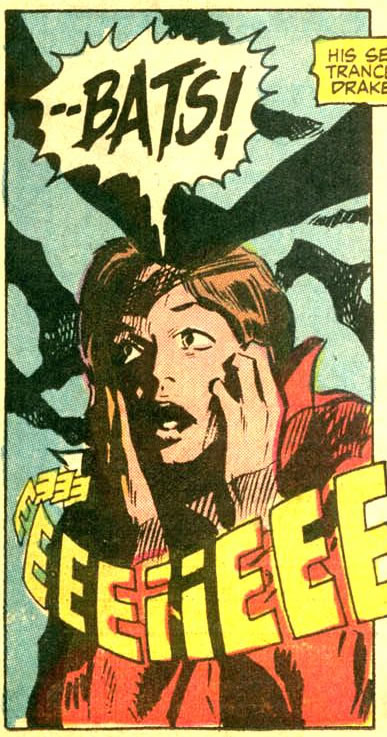
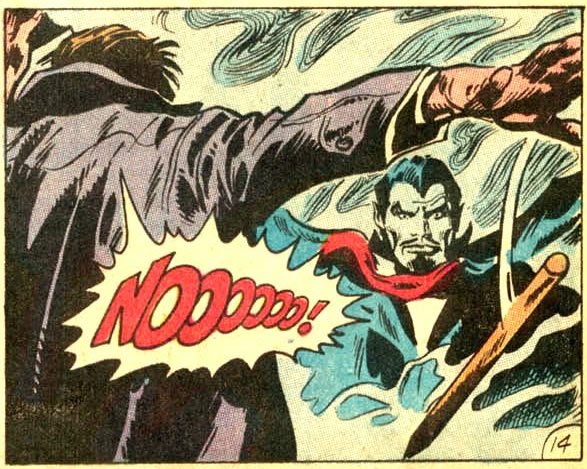
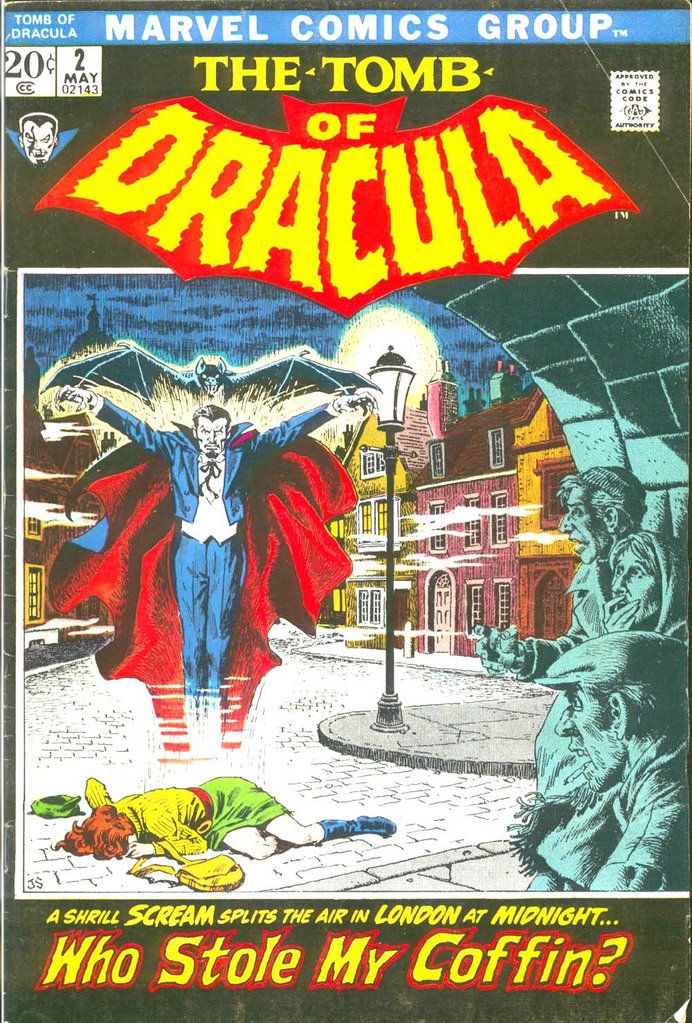
The Tomb of Dracula 2 (May 1972)
The story in Tomb of Dracula 2 is something of a retread of the first issue's. In fact a high degree of repetition is something the entire series suffers from. The basic storyline of 'Vampire hunters chase Vampire; Vampire escapes' doesn't lend itself to much varied interpretation. It is to the credit of the creators that they occasionally create such compelling stories out of so unpromising material.
 The story starts a short period after the end of the first issue - the exact length being unclear, though there is a reference by Clifton to having been in the pit for a number of days, where Dracula threw him to hold as 'food'.
We open with a newly confident Frank Drake searching the ruins of the castle with an apparently mute helper named Gort. Seeking revenge for the 'death' of his fiancé, Frank removes the vampire's coffin, believing that without it Dracula will die. Pausing only to rescue Clifton from the pit, Drake is soon off to London with his prize.
The coffin plan is a failure, as Dracula soon remarks (to himself, in grand style) as it's the earth in the coffin which sustains him, not the coffin itself. After a three page interlude where Dracula is compelled to visit a pub stocked solely with Cockney stereotypes ("Oh Bart, where's your blinkin' manners?") we move rapidly towards the issue's dénouement.
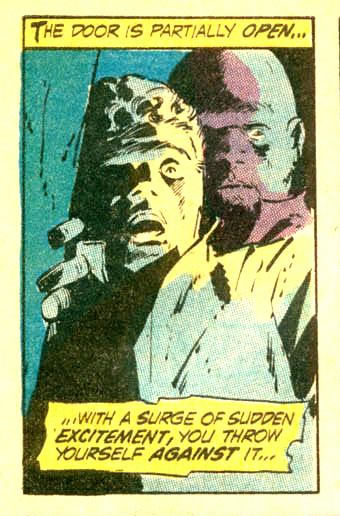
 As with the premiere issue, we end with the death of Jeanie, the female lead. This time she gets a 'proper' death at the hands of Frank, the issue concluding as her body turns to ashes.
Once the story ends you realise that, in the broadest sense, this issue is a retread of the first. The characters act in the same manner, the narrative is driven by similar events, and the conclusion is identical. The details betray some differences, and the location has moved from Eastern to Western Europe, but overall we are already treading water, despite this being only the second issue.
There is one part of the package marks this issue out as being inferior to the first - the inking of Vinnie Colletta. Colletta is something of a controversial figure in comic fandom, largely because of the high profile work he did with Jack Kirby throughout the 60s on Thor; work that was continued for the first half of the 70s over at DC on the Fourth World books. Some object to his work because they feel that, in search of speed, he (or his studio) would cut corners - usually by obliterating detail. Others object simply because his style, especially when matched with more powerful pencilers (Kirby and Toth spring to mind) was simply unsuitable. In his favour he was well known for delivering a job on time. Occasionally, especially romance jobs, his work gave the pages a 'feathery' look that was well suited to the subject.
 However, one thing he was not suited for was shadow and mystery - the archetypal key components of any vampire story. The pairing of Colan and Colletta on this issue just doesn't work. The inks are too thin and light. What should be shown as a deep shadow becomes instead an area of crosshatching, thus robbing a scene of its power.
Outside of this, the rest of the creators do what is expected of them. Despite the familiarity of the plot, the issue flows quite well, and the dialogue is workable, if clichéd. Strangely Gort appears to have been introduced and abandoned after 5 pages.
This would be Gerry Conway's final colour issue of The Tomb of Dracula, though he would pop up again on other Marvel vampire magazines. Barely 20 years old at the time these comics were published, he would eventually go on to write a well received (and controversial) run of The Amazing Spider-Man, and, briefly, become the Editor-in-Chief of Marvel's comic book line.
Issue 2 of The Tomb Of Dracula leaves us pretty much back at square one. Dracula himself has been revived, but the supporting cast around him is barely there. From the third issue this would change radically.
 The story starts a short period after the end of the first issue - the exact length being unclear, though there is a reference by Clifton to having been in the pit for a number of days, where Dracula threw him to hold as 'food'.
We open with a newly confident Frank Drake searching the ruins of the castle with an apparently mute helper named Gort. Seeking revenge for the 'death' of his fiancé, Frank removes the vampire's coffin, believing that without it Dracula will die. Pausing only to rescue Clifton from the pit, Drake is soon off to London with his prize.
The coffin plan is a failure, as Dracula soon remarks (to himself, in grand style) as it's the earth in the coffin which sustains him, not the coffin itself. After a three page interlude where Dracula is compelled to visit a pub stocked solely with Cockney stereotypes ("Oh Bart, where's your blinkin' manners?") we move rapidly towards the issue's dénouement.
 As with the premiere issue, we end with the death of Jeanie, the female lead. This time she gets a 'proper' death at the hands of Frank, the issue concluding as her body turns to ashes.
Once the story ends you realise that, in the broadest sense, this issue is a retread of the first. The characters act in the same manner, the narrative is driven by similar events, and the conclusion is identical. The details betray some differences, and the location has moved from Eastern to Western Europe, but overall we are already treading water, despite this being only the second issue.
There is one part of the package marks this issue out as being inferior to the first - the inking of Vinnie Colletta. Colletta is something of a controversial figure in comic fandom, largely because of the high profile work he did with Jack Kirby throughout the 60s on Thor; work that was continued for the first half of the 70s over at DC on the Fourth World books. Some object to his work because they feel that, in search of speed, he (or his studio) would cut corners - usually by obliterating detail. Others object simply because his style, especially when matched with more powerful pencilers (Kirby and Toth spring to mind) was simply unsuitable. In his favour he was well known for delivering a job on time. Occasionally, especially romance jobs, his work gave the pages a 'feathery' look that was well suited to the subject.
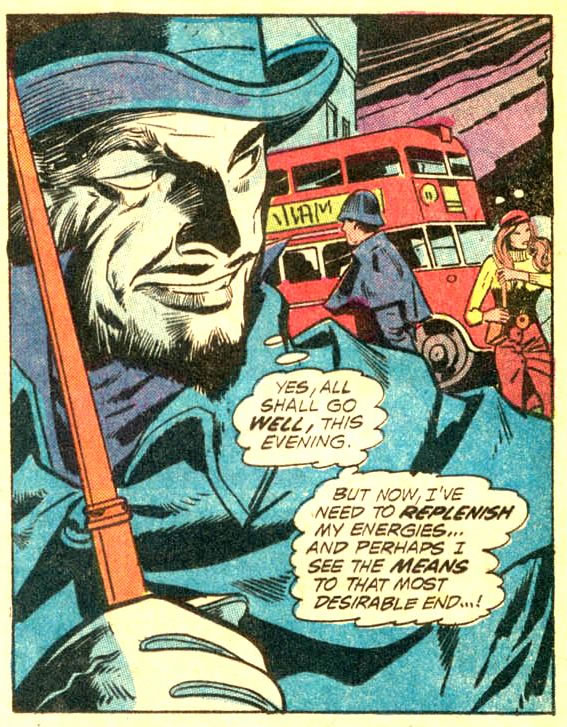 However, one thing he was not suited for was shadow and mystery - the archetypal key components of any vampire story. The pairing of Colan and Colletta on this issue just doesn't work. The inks are too thin and light. What should be shown as a deep shadow becomes instead an area of crosshatching, thus robbing a scene of its power.
Outside of this, the rest of the creators do what is expected of them. Despite the familiarity of the plot, the issue flows quite well, and the dialogue is workable, if clichéd. Strangely Gort appears to have been introduced and abandoned after 5 pages.
This would be Gerry Conway's final colour issue of The Tomb of Dracula, though he would pop up again on other Marvel vampire magazines. Barely 20 years old at the time these comics were published, he would eventually go on to write a well received (and controversial) run of The Amazing Spider-Man, and, briefly, become the Editor-in-Chief of Marvel's comic book line.
Issue 2 of The Tomb Of Dracula leaves us pretty much back at square one. Dracula himself has been revived, but the supporting cast around him is barely there. From the third issue this would change radically.
posted by George at 1/21/2007 10:51:00 am
0 comments